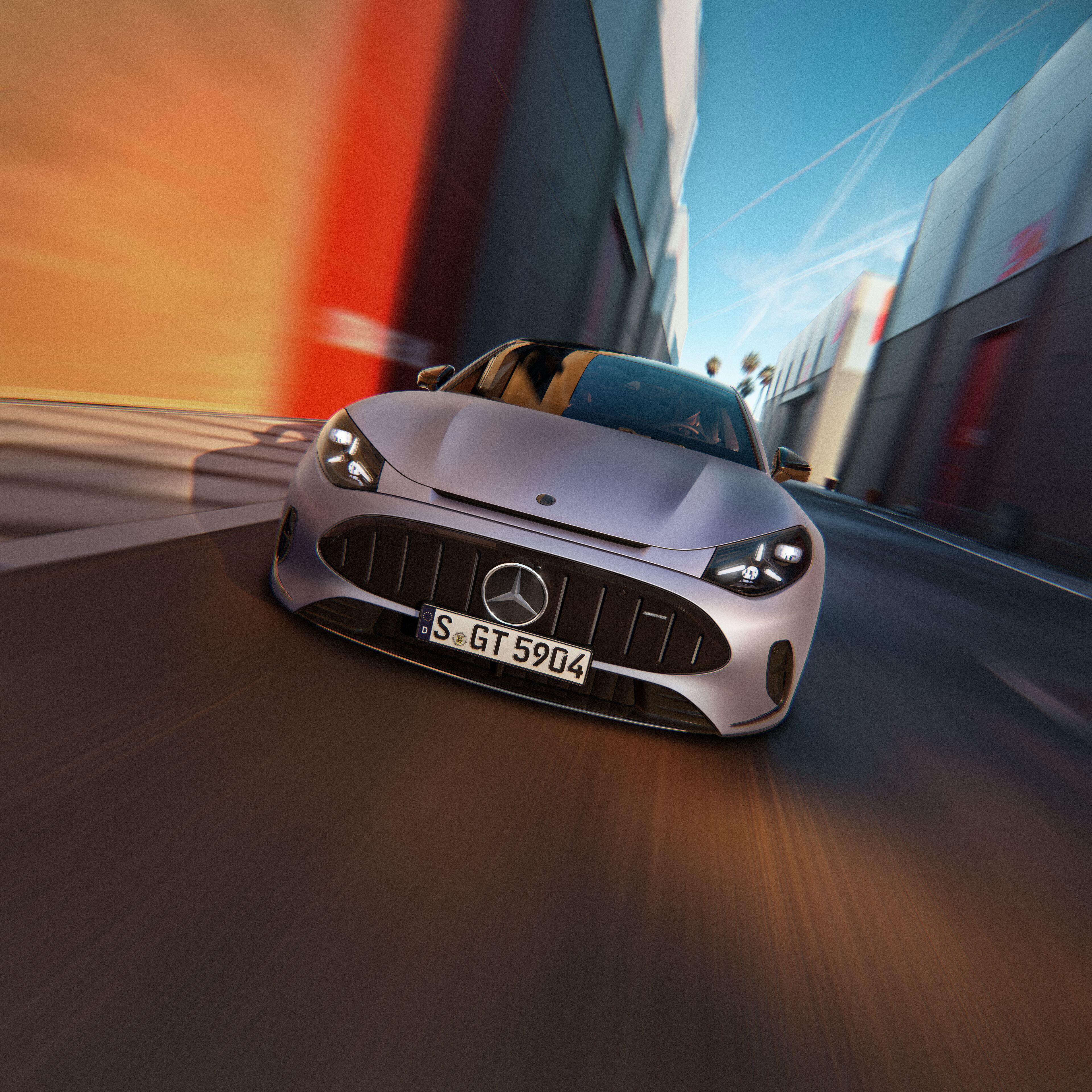
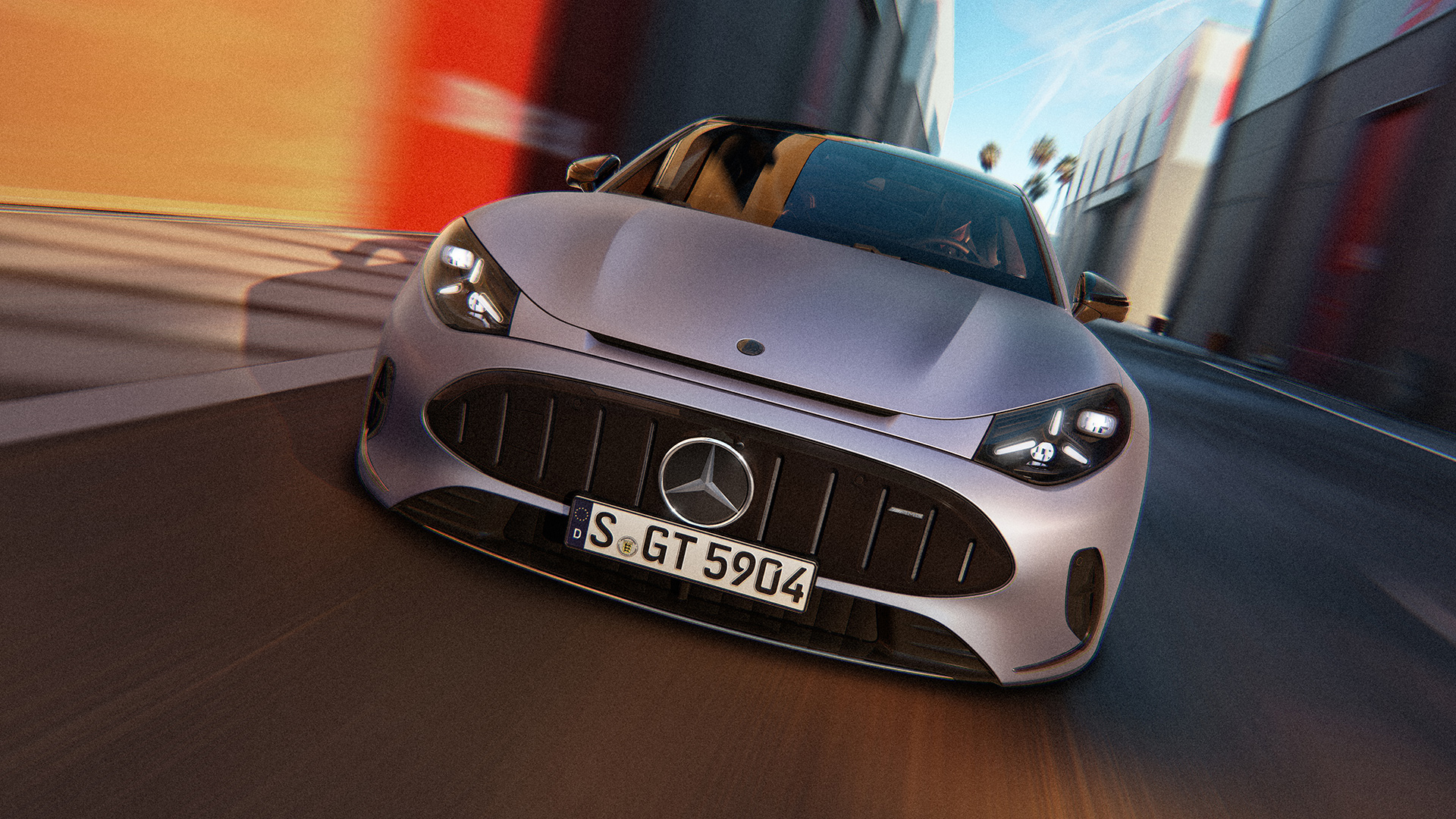
AMG’s new entry-level GT 4-Door packs 800 volts, 600-kW charging, all-wheel drive, and—because this is AMG—a digitally resurrected inline-six soundtrack.
There’s something mildly absurd about calling a 544-hp, all-wheel-drive performance car an “entry-level” anything. But this is AMG, and the new Mercedes-AMG GT 53 4-Door Coupe now assumes that role in the expanding GT lineup.
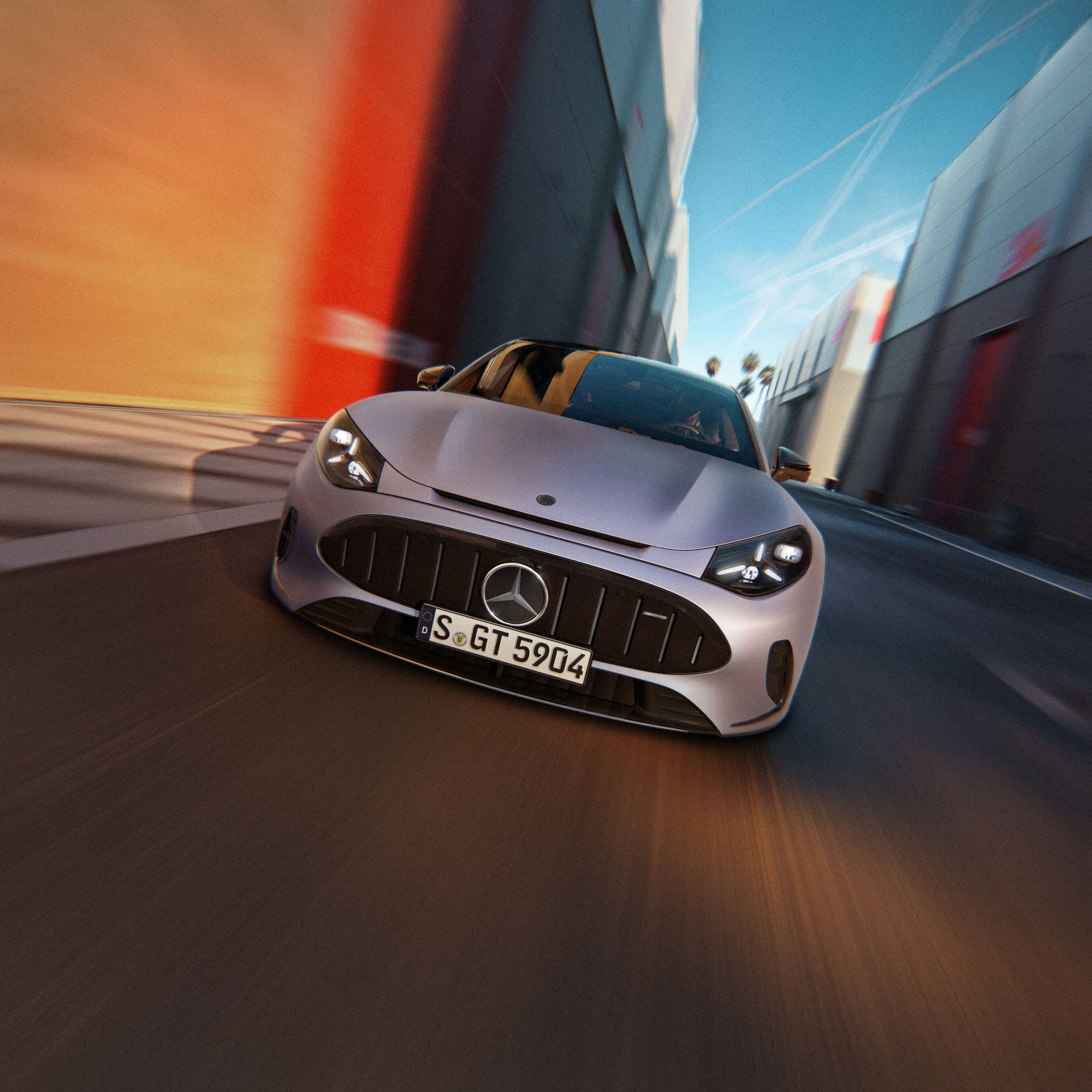
Mercedes‑AMG GT 53 4‑Door Coupé
More important: It’s electric.
Not electric with a small engine tucked somewhere under the hood. Not a plug-in hybrid. Fully electric, with a pair of permanently excited synchronous motors, a 106-kWh battery beneath the floor, and enough high-voltage wizardry to send the GT 53 from 0 to 100 km/h in as little as 3.5 seconds with a 1-foot rollout.
And apparently AMG decided silence wasn’t going to cut it.
Two Motors, 544 HP, and a Two-Speed Rear Gearbox
The GT 53 uses one electric motor at each axle, producing a combined peak output of 400 kW—544 hp—and 800 Nm of torque. Continuous output is rated at 367 hp.
The rear motor does most of the heavy lifting and is paired with an unusual two-speed transmission. First gear uses a short 11:1 ratio intended to provide hard launches while remaining useful around town. Second drops that to 5:1, prioritizing higher-speed performance, highway efficiency, and range.
Up front, the second motor essentially serves as an on-demand boost unit. Mercedes says a disconnect mechanism can completely decouple it when additional traction or power isn’t needed, leaving the car rear-drive under lighter loads to reduce losses.
Ask for everything, though, and both motors wake up.
AMG Performance 4MATIC+ can continuously vary torque between the axles, while the standard AMG Ride Control air suspension uses independently controlled compression and rebound damping. Comfort, Sport, and Sport+ damper settings give the GT the sort of broad personality Mercedes expects from something carrying both AMG and Gran Turismo badges.
Top speed is electronically limited to 230 km/h, or about 143 mph. Add the optional AMG Driver’s Package and that climbs to 250 km/h, roughly 155 mph.
Those aren’t hypercar numbers. They’re also probably more than enough for a 5,236-pound four-door sedan masquerading as a coupe.
The Battery Might Be the More Interesting Part
Horsepower gets the headline, but the GT 53’s battery technology is arguably the bigger story.
The 106-kWh usable pack operates at 800 volts and contains 2,660 cylindrical cells divided among 18 modules. Mercedes-AMG uses tall, narrow cells measuring 105 mm high and 26 mm in diameter, with an aluminum housing, full-tab construction, an NCMA cathode, and a silicon-containing anode.
More interesting is how AMG keeps them cool.
Instead of relying exclusively on cooling plates mounted around the battery modules, electrically non-conductive oil flows directly around each individual cell. The idea is to keep cell temperatures exceptionally uniform, particularly when repeatedly asking the battery to dump—or absorb—huge amounts of energy. AMG claims energy density exceeding 298 Wh/kg.
There’s also something Mercedes calls the Central Coolant Hub, essentially an integrated thermal-management command center incorporating pumps, sensors, valves, radiators, and a chiller. It can shuffle cooling capacity among the battery, motors, and associated electronics depending on which components need it most.
That matters because the GT 53 can charge very, very quickly.
How Does 600-kW Charging Sound?
Maximum DC charging power is a claimed 600 kW.
Yes, 600.
At a compatible 800-volt charger, Mercedes says the GT 53 can add 70 kWh in 10 minutes, corresponding to as much as 534 kilometers—roughly 332 miles—of WLTP range. A 10-to-80-percent charge is listed at just 11 minutes under the specified test conditions.
Those are preliminary figures, and there’s an obvious catch: finding charging infrastructure capable of delivering anything close to 600 kW.
Mercedes has accounted for less ambitious hardware, though. The car can also charge on 400-volt DC infrastructure, automatically switching operating modes when necessary.
Fully charged, Mercedes quotes 682 to 809 kilometers of WLTP range depending on configuration. That works out to approximately 424 to 503 miles. Urban WLTP figures stretch as high as 880 kilometers, or about 547 miles.
EPA numbers, and any corresponding U.S.-market specifications, aren’t included in the announcement.
Then AMG Made It Pretend to Have an Engine
Here’s where things get wonderfully strange.
Select AMGFORCE Sport+ and the GT 53 can simulate not merely the noise of a combustion engine, but the behavior of one.
There are simulated gear changes. There are deliberate interruptions in acceleration during those shifts. You can even request your pretend gears manually with the steering-wheel paddles.
And the sound isn’t some generic computer-generated growl.
AMG says its engineers recorded the 3.0-liter inline-six from the previous Mercedes-AMG E 53 Coupe, using 16 microphone positions inside and outside the vehicle and conducting more than 100 measurements. Those recordings were then used to construct the GT 53’s synthesized powertrain soundtrack.
Is manufacturing the sensation of an internal-combustion drivetrain in a car engineered specifically to eliminate one a little ridiculous?
Absolutely.
Could it also be fun?
Absolutely.
Owners who don’t want the theater aren’t stuck with it. A separate Sound Slider offers Powerful, Balanced, and Minimal modes, along with a scale that moves the sound character between what Mercedes calls Classic and Futuristic.
AMG Still Wants the Driver Involved
The customization doesn’t end with fake cylinders.
A rotary controller Mercedes calls Response Control lets the driver independently alter accelerator response without changing the car’s overall drive mode. That means you could theoretically combine a relatively relaxed chassis setting with much sharper accelerator mapping—or dial things in the opposite direction.
AMG Setup adds further customization, including configurable steering-wheel shortcuts and manual control of the active aerodynamic hardware.
There are six primary drive programs: Comfort, Sport, AMGFORCE Sport+, Slippery, Eco, and Individual.
Eco reduces available power, torque, and top speed while favoring rear-wheel drive and lowering the chassis. Sport keeps all-wheel drive permanently engaged and firms up the suspension. Slippery does what you’d expect, softening responses while keeping both axles working for wet, snowy, or icy surfaces.
Sport+ is where the virtual inline-six comes out to play.
Yes, It Has Active Aero
The GT 53 also gets two pieces of active aerodynamic hardware.
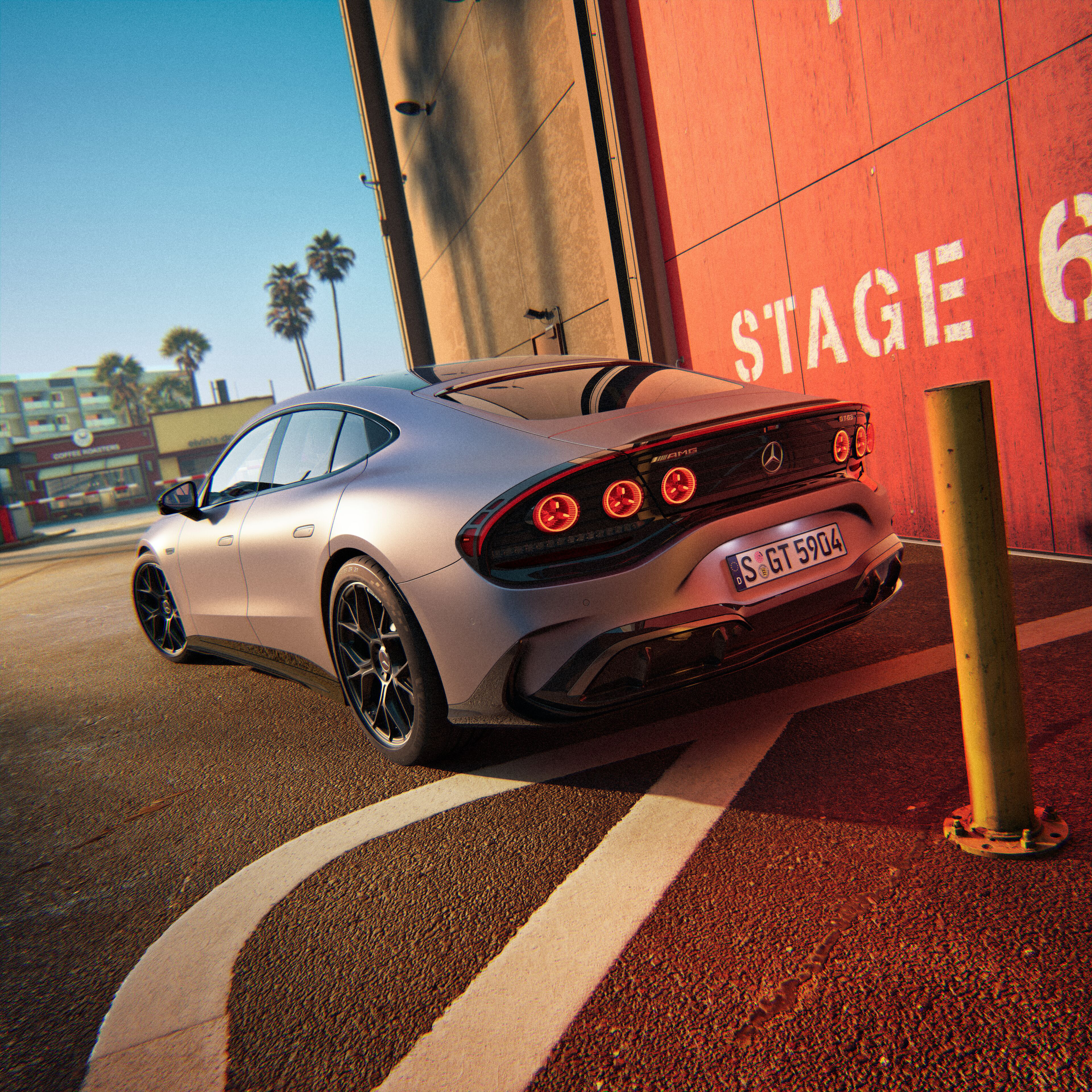
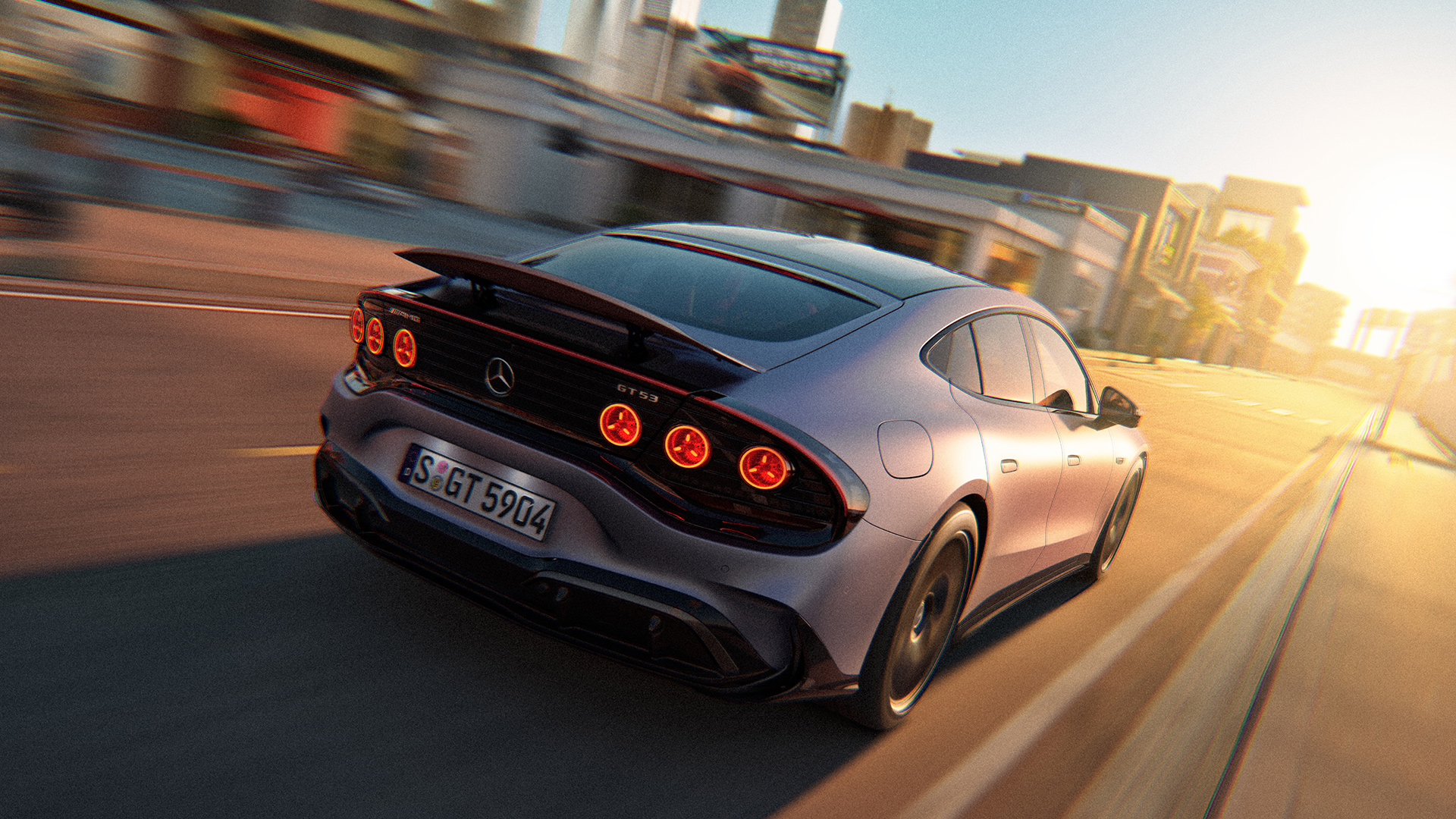
An active rear spoiler is standard. Below 150 km/h—about 93 mph—it generally stays tucked away. At higher speeds, its angle changes according to vehicle speed, acceleration, aero settings, and driving behavior. Push hard enough and it can deploy into its steepest position for greater rear stability and downforce.
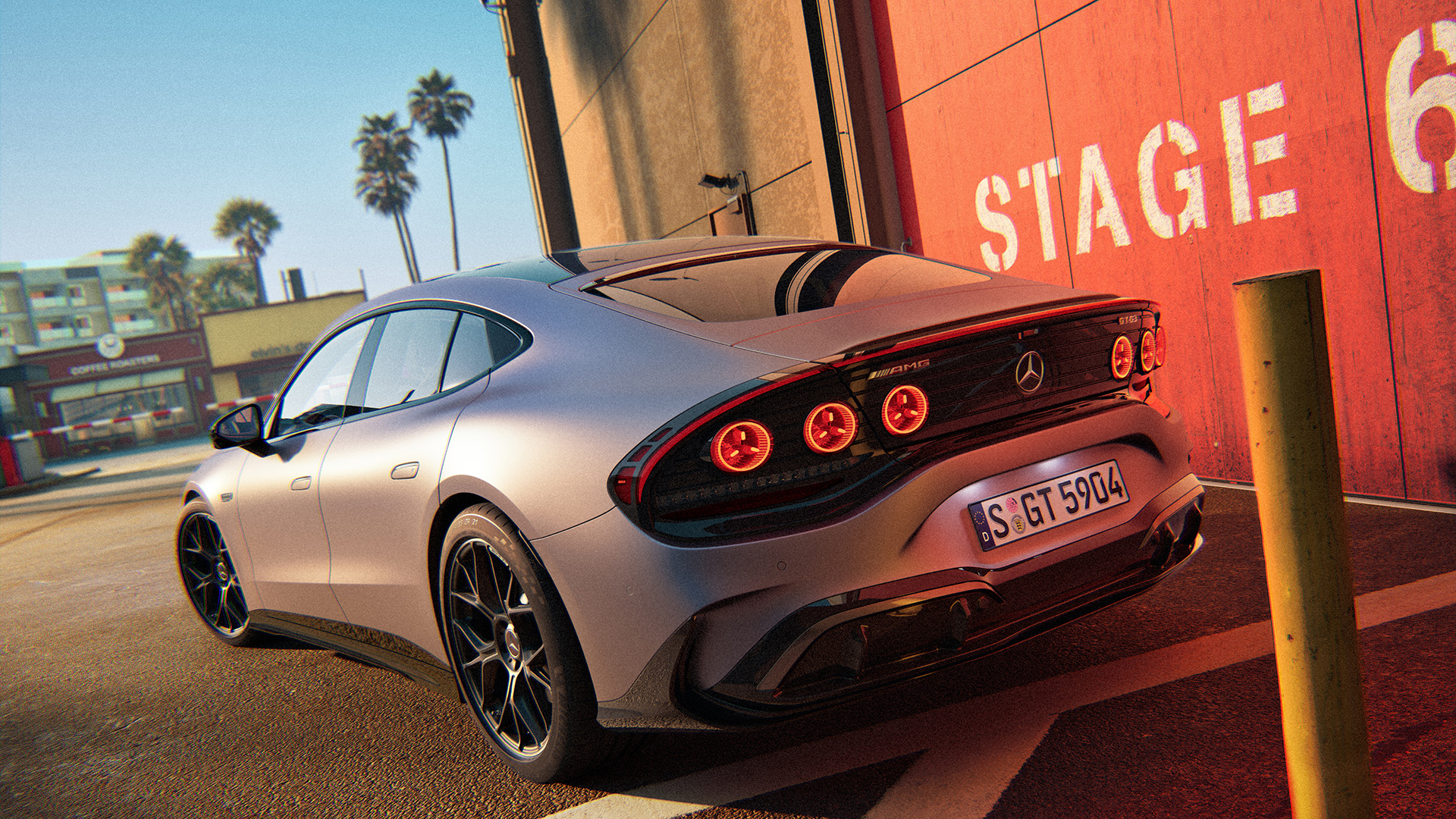
There’s also an optional active rear diffuser that physically extends the vehicle’s rear contour to reduce drag, particularly during sustained high-speed driving.
The numbers suggest the aero work paid off: Mercedes lists a drag coefficient of 0.21.
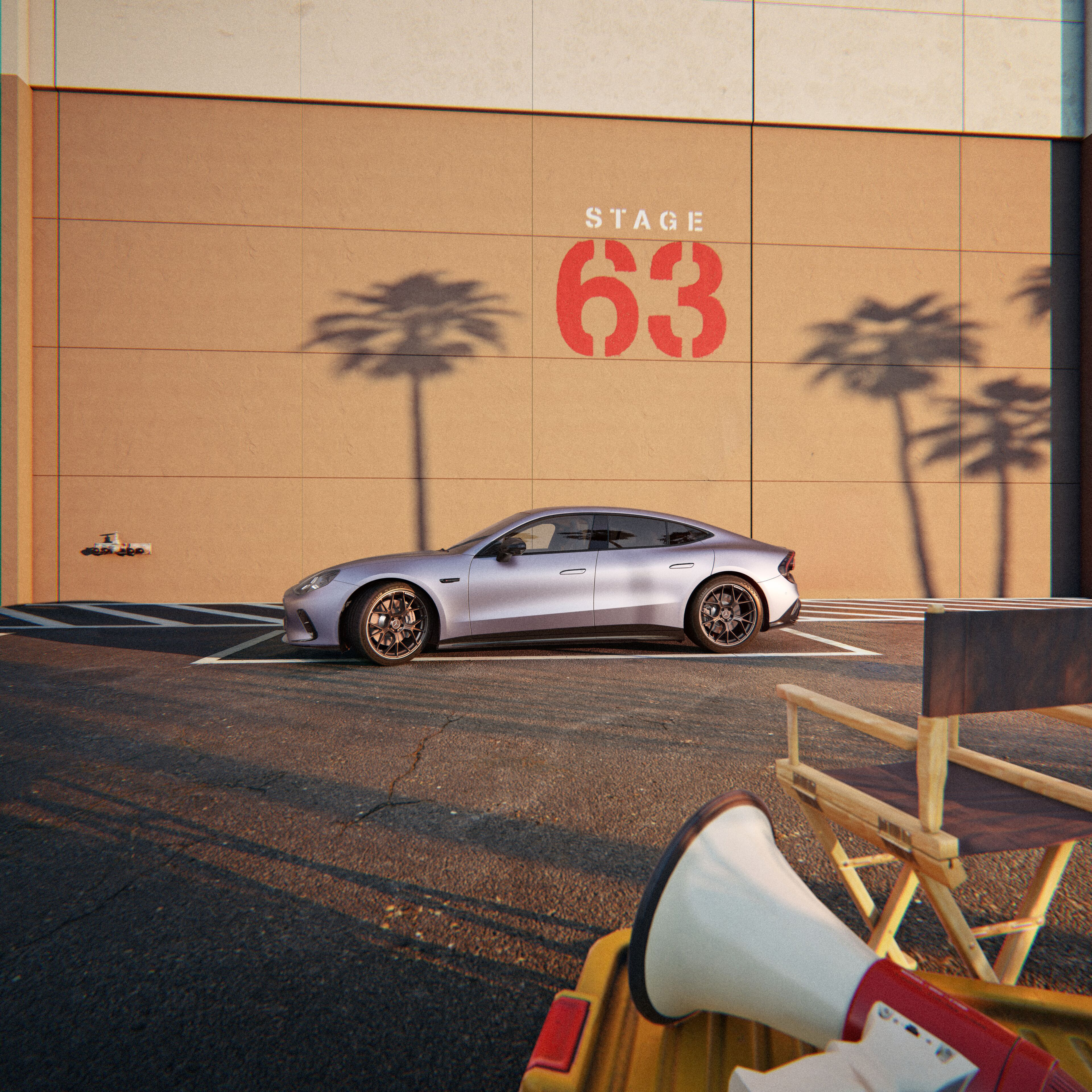
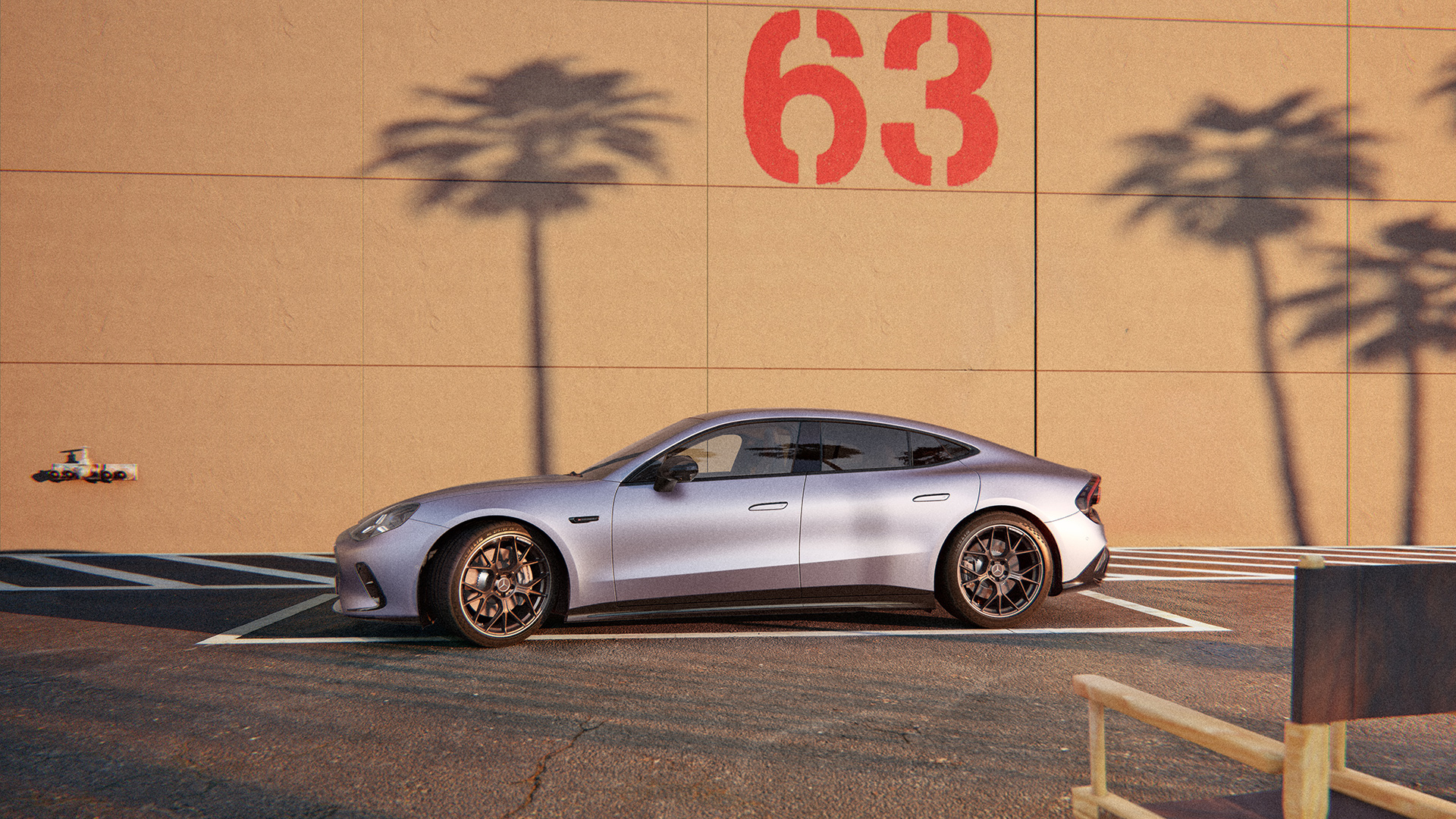
The car itself measures 5,094 mm long, 1,959 mm wide, and just 1,411 mm tall—about 4 centimeters lower than its predecessor despite carrying that large battery underneath the passenger compartment. Wheelbase stretches 3,040 mm.
So, yes, it’s big.
But visually, Mercedes has done its best to make it look long, low, and appropriately sinister.
Inside, It’s Still a Grand Tourer
For all the performance theatrics, this remains a four-door GT intended to cover serious distance.
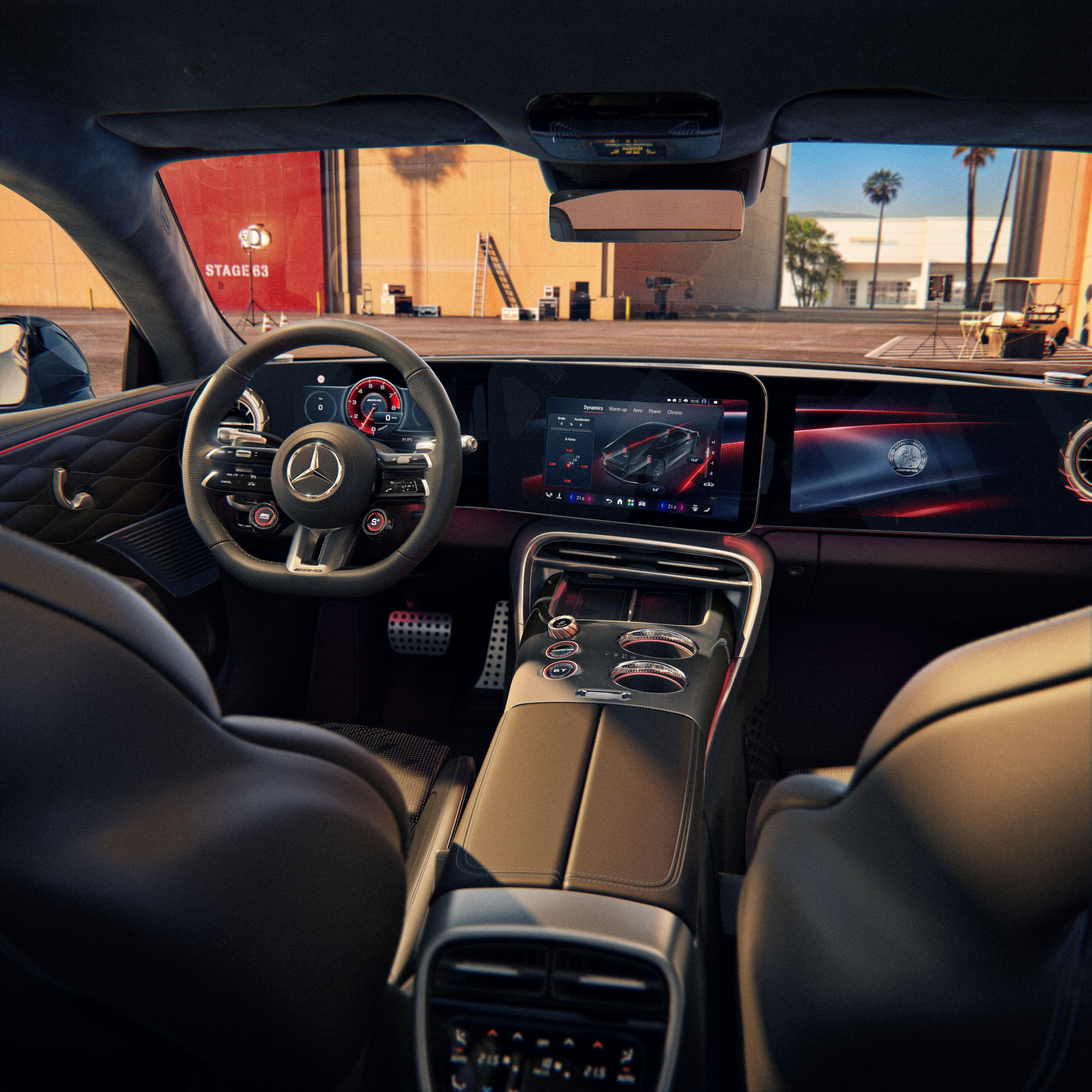
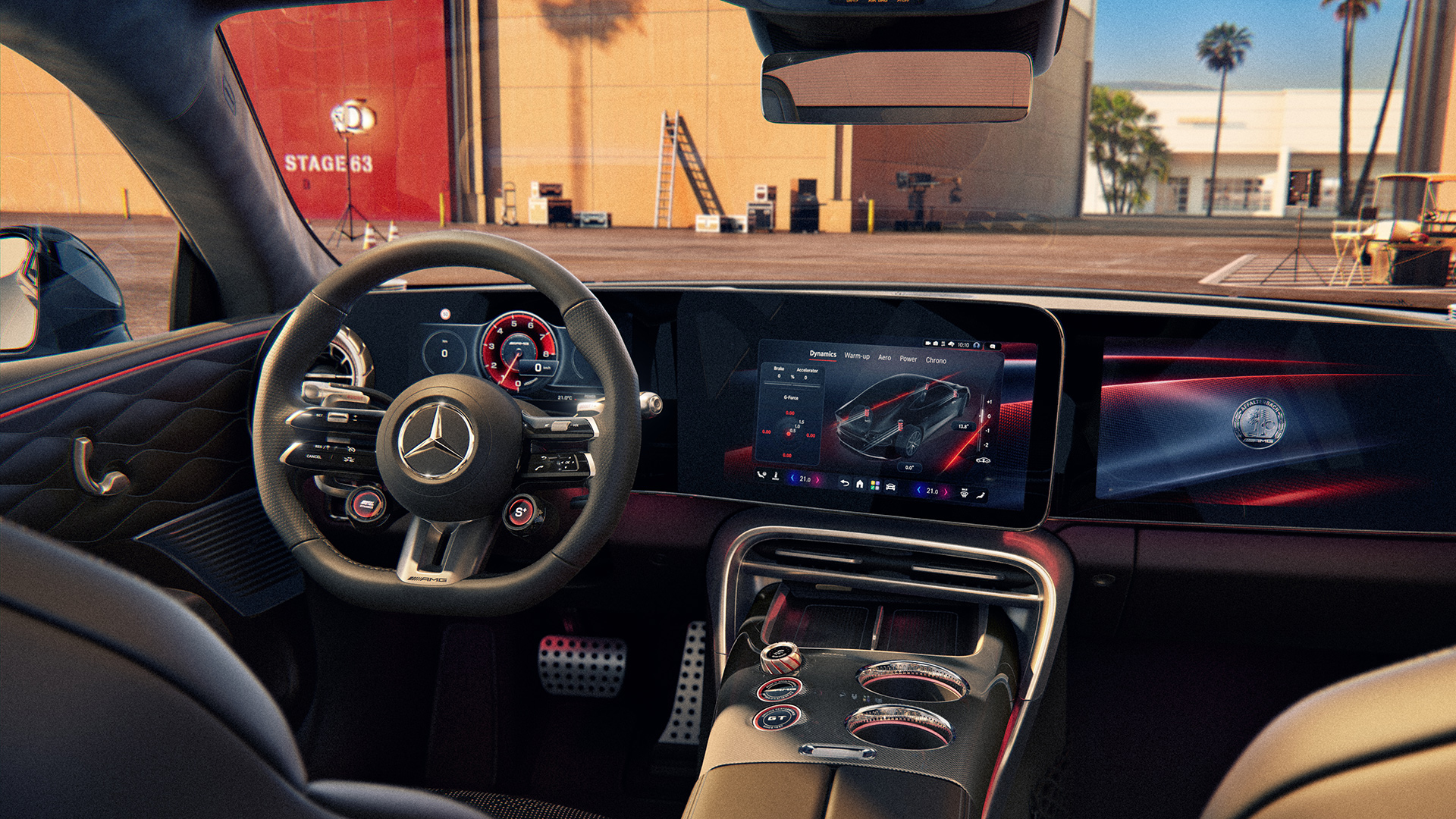
The cabin uses a low seating position, individual rear seats, a driver-oriented center console, and a 14-inch central display integrated with the instrument panel beneath a seamless-glass-style surface.
An optional passenger display is available, as is a large SKY CONTROL panoramic roof that stretches toward the rear window and can electronically alter its transparency in individual sections.
There are also two wireless smartphone charging areas, illuminated cupholders, a closed center-console storage compartment, and 415 liters of VDA-rated luggage space in back. Another 41 liters of VDA-rated storage lives under the hood.
In other words, AMG hasn’t forgotten the “GT” part.
The Electric AMG Starts Getting Interesting
The GT 53 may sit below the GT 55 and GT 63 in AMG’s new four-door hierarchy, but nothing about the specification sheet feels particularly junior.
There’s 544 hp. An 800-volt electrical architecture. Direct battery-cell cooling. All-wheel drive. Air suspension. Active aero. A two-speed transmission. Up to 600-kW charging. And potentially more than 800 kilometers of WLTP range.
Then there’s that virtual inline-six.
Electric performance cars have spent years proving they can be obscenely fast. The harder problem has been making them interesting after the first full-throttle launch.
AMG appears to understand the distinction.
Instead of treating electrification purely as an exercise in acceleration and efficiency, the GT 53 attempts to manufacture some of the interaction, sound, and mechanical drama that EVs inherently remove. Whether simulated shifts and a digitally reconstructed six-cylinder soundtrack feel brilliantly theatrical or hopelessly artificial will ultimately depend on what happens from the driver’s seat.
But at least AMG is experimenting.
German sales begin August 13, 2026, with the Mercedes-AMG GT 53 4-Door Coupe starting at €115,430 including Germany’s 19-percent VAT. Mercedes has not provided U.S. pricing or availability in the supplied announcement.
For an “entry-level” AMG, there’s an awful lot going on here.